MONARCH • JOSTENS
Modernizing mission critical software without grounding customers.
Reimagined decades-old software—leading the work from discovery and partner selection through a four-month MVP build, then evolving the product over multiple years.
Tens of millions in annual revenue protected
Role
Lead product manager • UX strategy
Product
Monarch · Cloud yearbook publishing platform with Adobe InDesign integration
Stage
Legacy rebuild → MVP → Platform evolution → UX modernization
Timeline
Winter 2020 to Summer 2026
What I owned
Product strategy • Partner selection and contracting • Roadmap and prioritization • UX direction • Requirements and acceptance criteria • UAT and launch
Team
Product and engineering • Sales, marketing and customer support • Operations and IT • External technology partners
THE CHALLENGE
A 20-year dependency put customers and a major source of revenue at risk.
The problem: Monarch depended on licensed custom InDesign plug-in software built over nearly 20 years. When the license ended, we would lose access to that technology—and none of it could be reused in the replacement.
What was at risk: Without a new solution, customers could lose the ability to create and submit their yearbooks with Monarch, putting tens of millions in annual revenue at risk.
What made it hard: Before a four-month build could begin, I needed to secure a larger budget, select the right technology partner, and define the MVP. From there, I had to decide which tools and features customers needed at launch, which could follow over the next six months, and which would have to wait until the next school year—all while customers continued using the product.
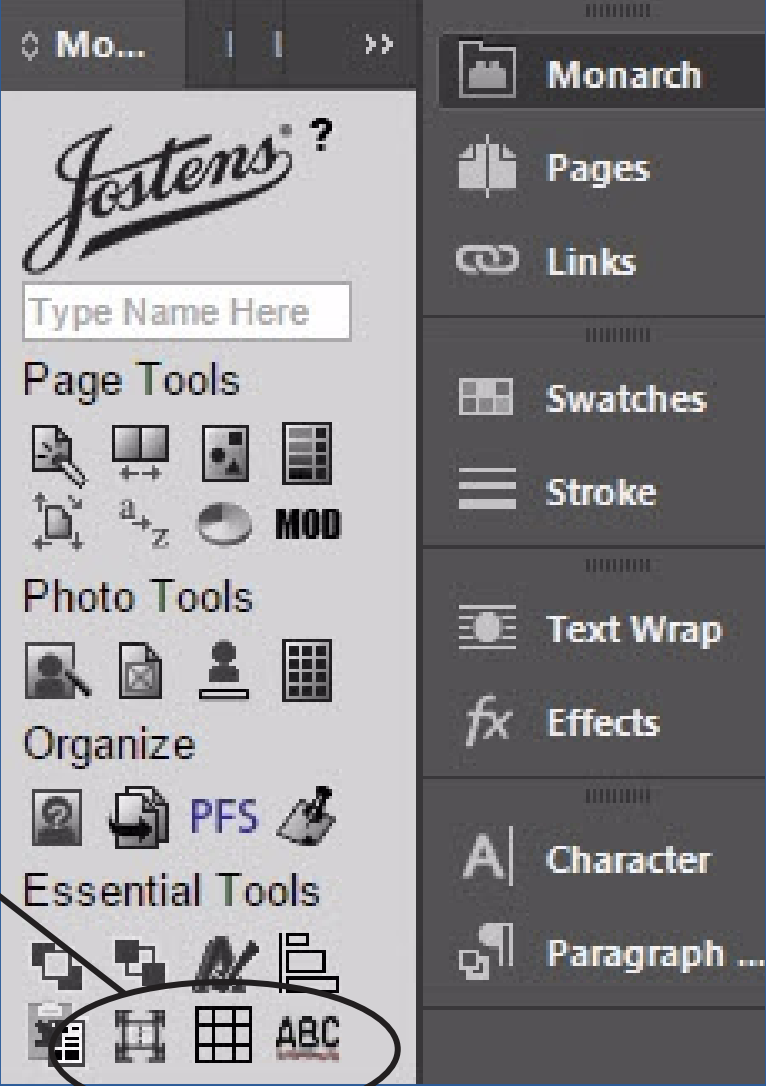
Legacy plug-in software panel docked in InDesign.
WHAT WE LEARNED
The software wasn’t the only thing that needed rebuilding.
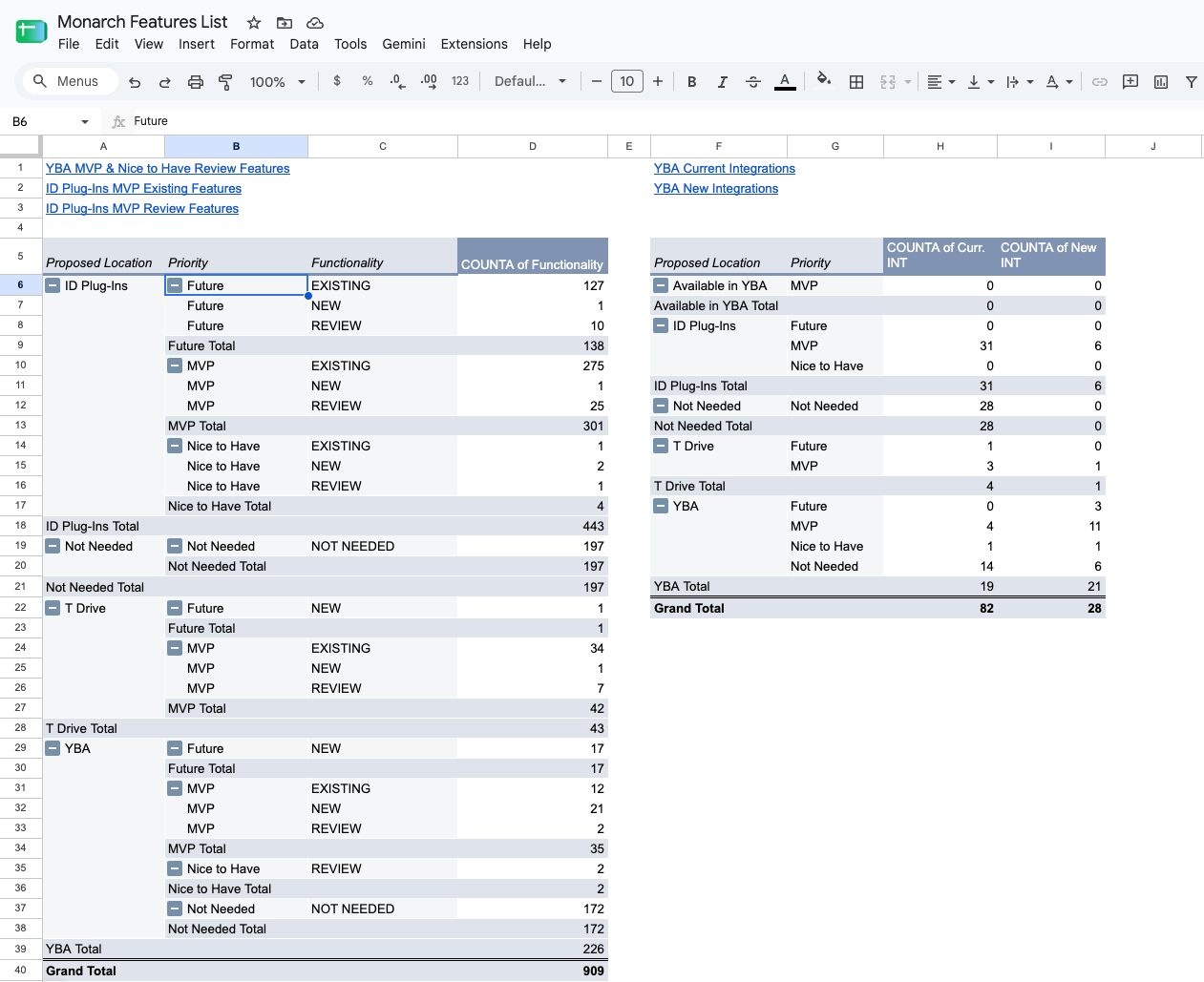
How I learned. I worked across the organization—and directly with customers—to understand how Monarch worked and what mattered most. Through interviews, working sessions, and an extensive feature audit, I documented essential workflows, customer pain points, and opportunities to improve the experience.
What we uncovered. Monarch had evolved as a stand-alone, disconnected product. It duplicated foundational services—such as image storage and ready-made design content—and lacked a clear, shared model for product ownership, support, training, and continued development.
How it changed the plan. The goal expanded beyond replacing the legacy InDesign plug-ins. We needed to rethink Monarch as part of a larger product ecosystem—preserving the creative workflows customers relied on, connecting the experience to shared platform services, and making the product easier for customers to use and more sustainable for the organization to support.
THE STRATEGY
Build what schools needed first. Build the rest around their year.
The product decision. Jostens decided to rebuild rather than purchase the legacy plug-ins. I shaped the product strategy around better integrating Monarch into Yearbook Avenue—reusing shared services instead of rebuilding them and creating a more consistent experience across yearbook creation methods.
The MVP. The first release focused on the essential tools and workflows schools needed out of the gate at the beginning of the year.
The roadmap. I sequenced the next six months around the rhythm of the school year, introducing tools and features before customers reached the moments when they needed them.
Success meant continuity. Customers could keep creating without disruption, each priority feature was ready when it became essential, and internal teams understood who owned product decisions, training, support, communications, and escalation.
THE EXPERIENCE
It needed to feel like it had always belonged in InDesign.
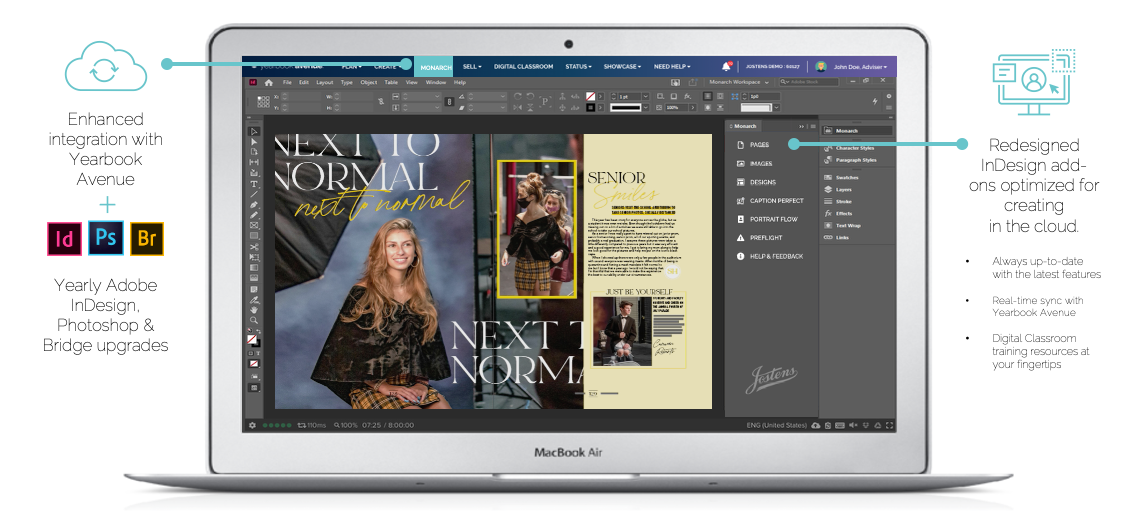
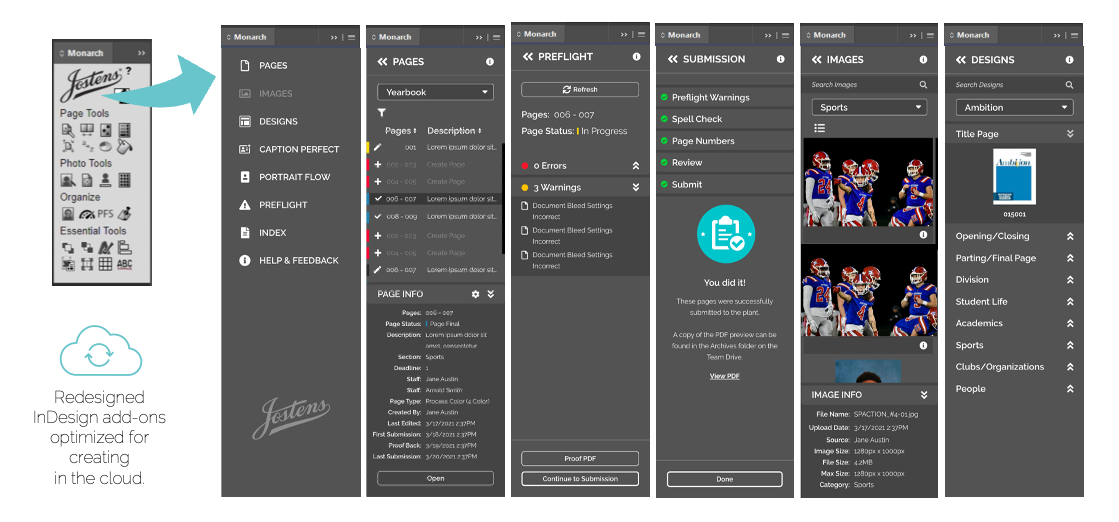
Native by design. We followed InDesign’s visual language so the Jostens InDesign Add-ons panel felt like a natural part of the workspace—not a separate application layered on top.
Consistent across products. For common tasks such as placing images or starting from ready-made designs, I guided the team toward patterns already used in our other yearbook creation platform. This created a more consistent experience for customers and made the product easier for sales, training, and support teams to explain.
Familiar beyond the desktop. When customers needed more detail than a compact panel could comfortably hold, we borrowed familiar interaction patterns from mobile apps—sliding views, expandable information, and scrollable panels.
Designed as one system. Any color, status treatment, or shared interface pattern came from the broader design system, helping Monarch feel connected to the rest of the product family while still respecting the conventions of InDesign.
THE HARD CALLS
We couldn’t rebuild everything at once. So we prioritized what mattered most.
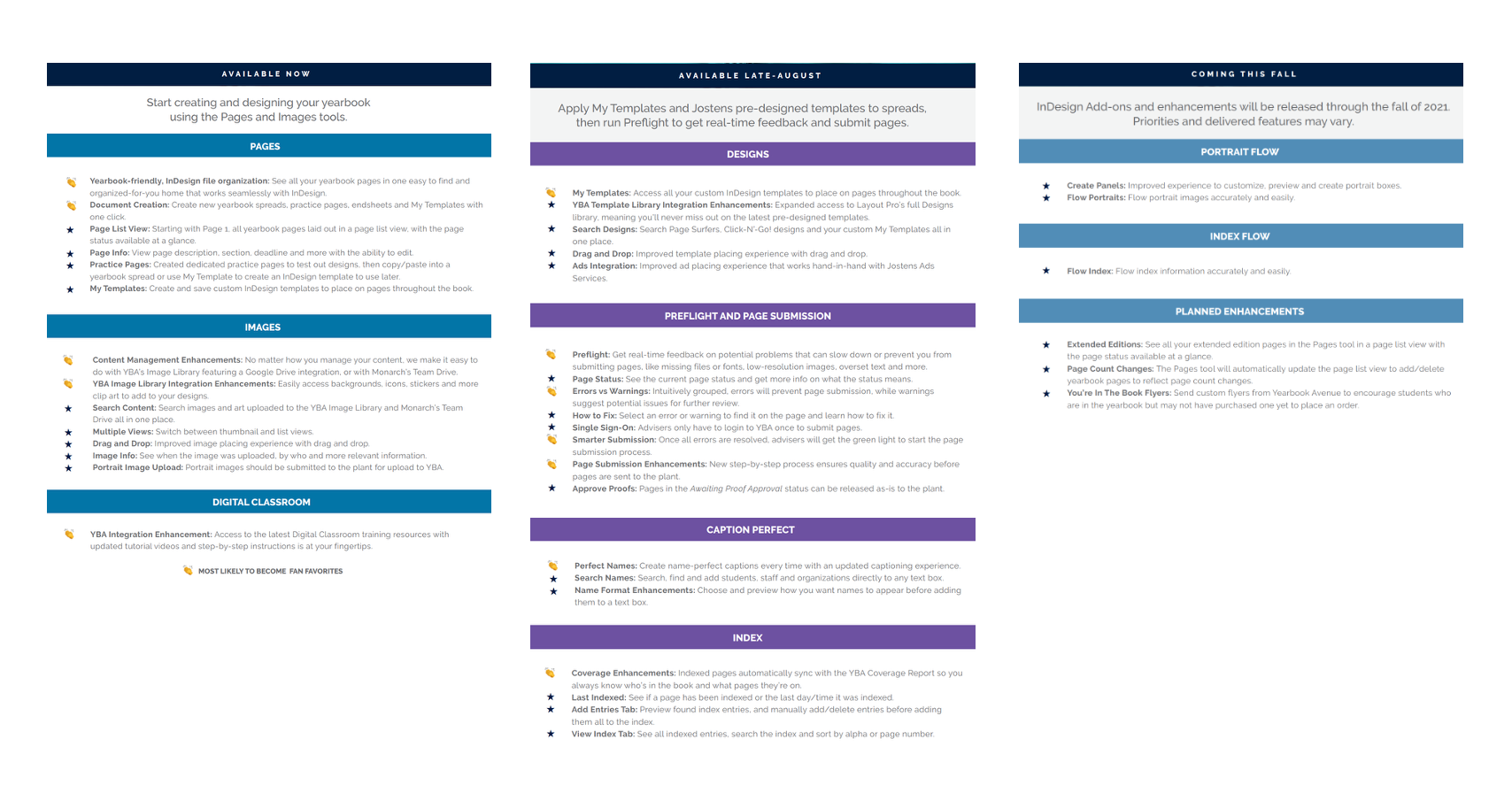
What we protected. The MVP preserved the essential workflows schools needed to begin creating, manage their work, and ultimately submit a yearbook. Anything that could prevent customers from completing that journey took priority.
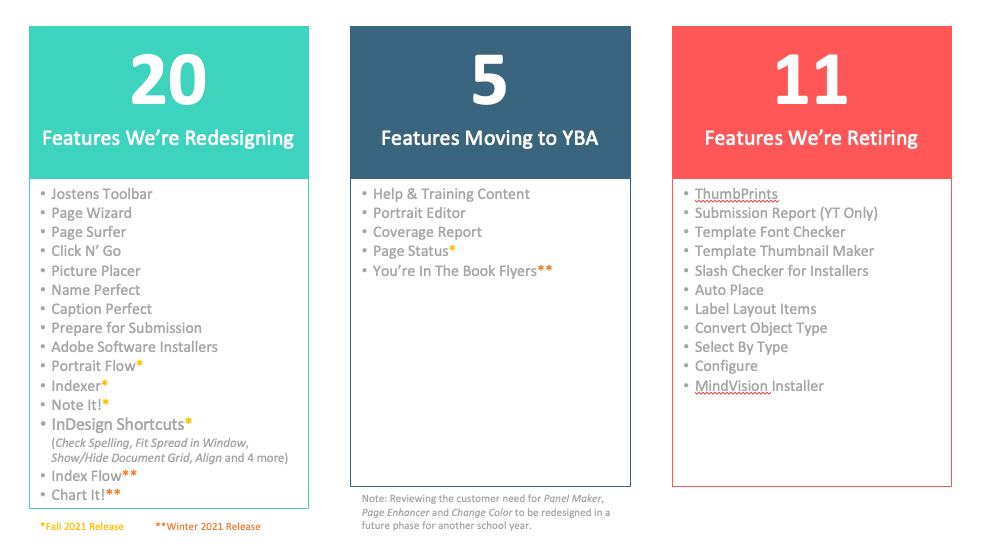
What we deferred. Lower-use tools and more complex features that were not essential to immediate continuity moved to later releases. Some could follow during the first school year; others needed to wait for a second phase.
What we accepted. The new product would arrive in stages rather than all at once. We used existing platform tools and temporary workarounds where they could meet customer needs, buying time to design more sustainable solutions later.
Why we made the call. The timeline left no room to recreate every legacy feature before launch. Committing to a technology partner with proven underlying capabilities gave us the foundation to deliver the MVP quickly, continue building throughout the year, and avoid putting the entire customer experience at risk.
FROM PLAN TO PRODUCT
Months of groundwork. Four months to build and launch.
Creating the foundation. I established the MVP scope and multi-year roadmap, evaluated potential technology partners, and secured leadership support for a significantly larger investment than originally planned. A long-term licensing agreement gave the team access to proven underlying technology we could build on immediately—making the launch timeline possible.
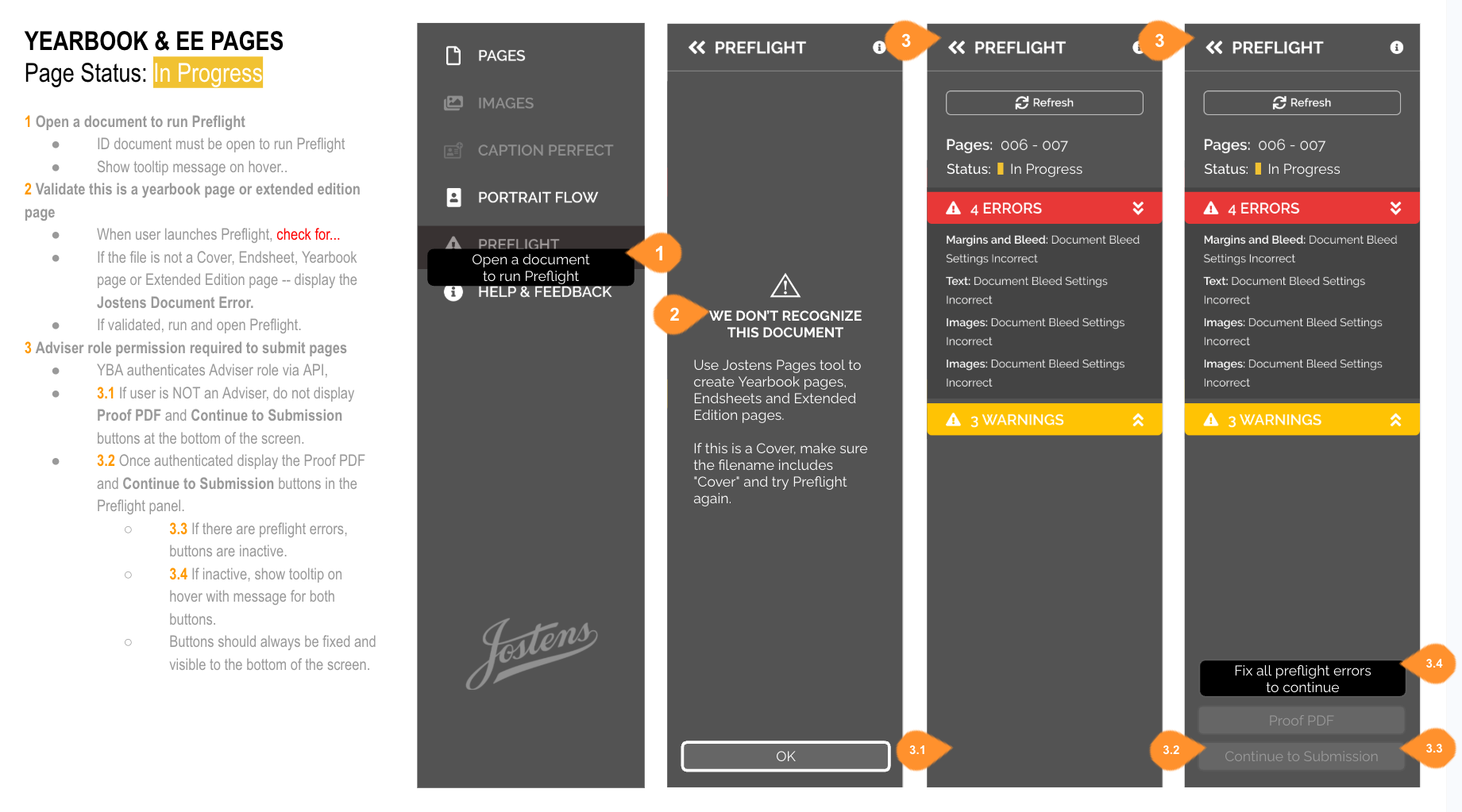
Turning direction into detail. I translated the product strategy into customer flows, prototypes, user stories, and acceptance criteria. Working closely with an associate product manager and engineering partners, I guided the experience from early concepts into requirements the team could confidently design and build.
Keeping the work connected. I coordinated product, engineering, operations, sales, and support around shared priorities, dependencies, and release milestones. That continuity helped prevent the experience, technical implementation, and operational needs from drifting apart as the work moved quickly.
Owning readiness through launch. Because I had reconstructed the product in detail, I stayed closely involved through quality assurance and led UAT, documentation, internal training, and launch readiness. This ensured the product worked as intended—and that the teams responsible for selling, supporting, and operating it were ready when customers arrived.
THE IMPACT AND EVOLUTION
Protected a critical revenue stream and created a path to keep evolving.
The immediate impact. The MVP launched after a four-month build, allowing schools to start on schedule and protecting tens of millions in annual revenue. Over the next six months, we grouped the remaining priority work into larger releases aligned to when schools needed it—making improvements easier to communicate, train, support, and deliver with less disruption and regression risk.
A roadmap shaped by customers. After the first school year, we surveyed customers who now had firsthand experience with the new product and their feedback helped shape the roadmap and release priorities.
A product that kept getting better. We repeated that learning cycle, measuring satisfaction and using customer feedback to refine workflows, address pain points, and guide continued investment. Over time, that contributed to a 10-point improvement in overall customer satisfaction.
Built to evolve again. By early 2025, another major platform migration was needed. I secured renewed leadership investment and used the move to Adobe UXP as an opportunity to improve areas where customers still experienced friction.
A more sustainable future. Product ownership, customer learning, funding, platform maintenance, and continued development became ongoing organizational responsibilities—giving the business a clearer model for sustaining a product tied to tens of millions in annual revenue.